


When to Resurface vs. Replace Your Asphalt Parking Lot
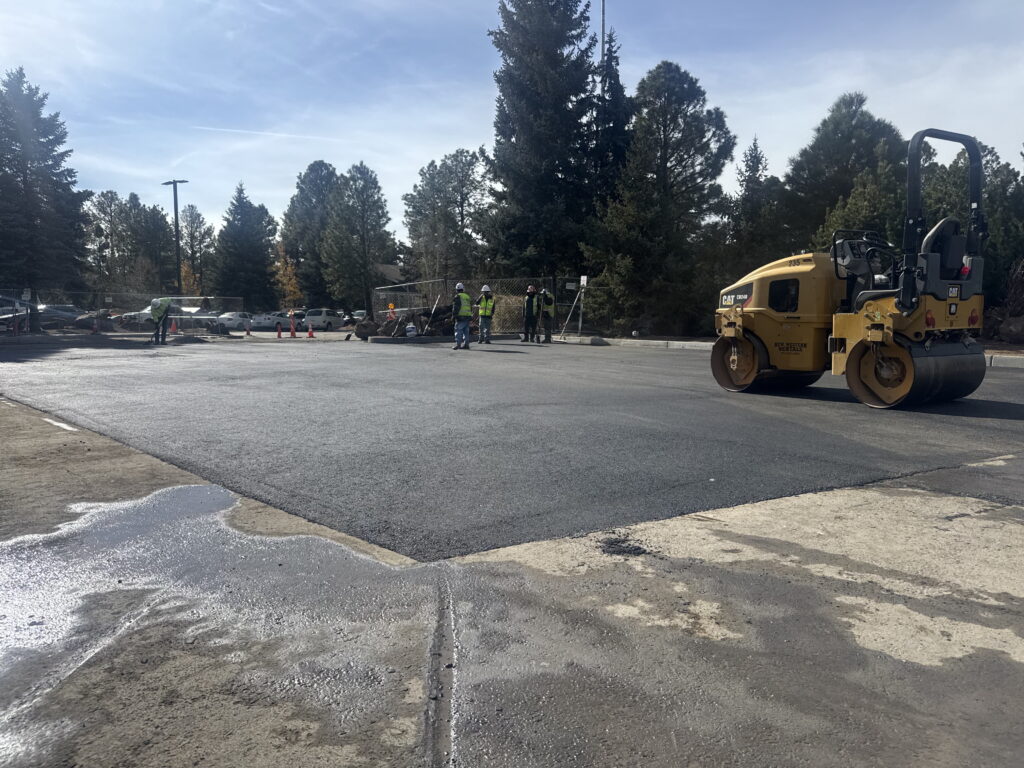

Your parking lot is cracking and tenants are complaining. The question every Arizona property manager faces: do you resurface, or do you rip it out and start over? If you’re deciding between asphalt resurfacing vs. replacement for your commercial property, the answer depends on base condition, surface damage extent, and your timeline for the next capital expenditure.
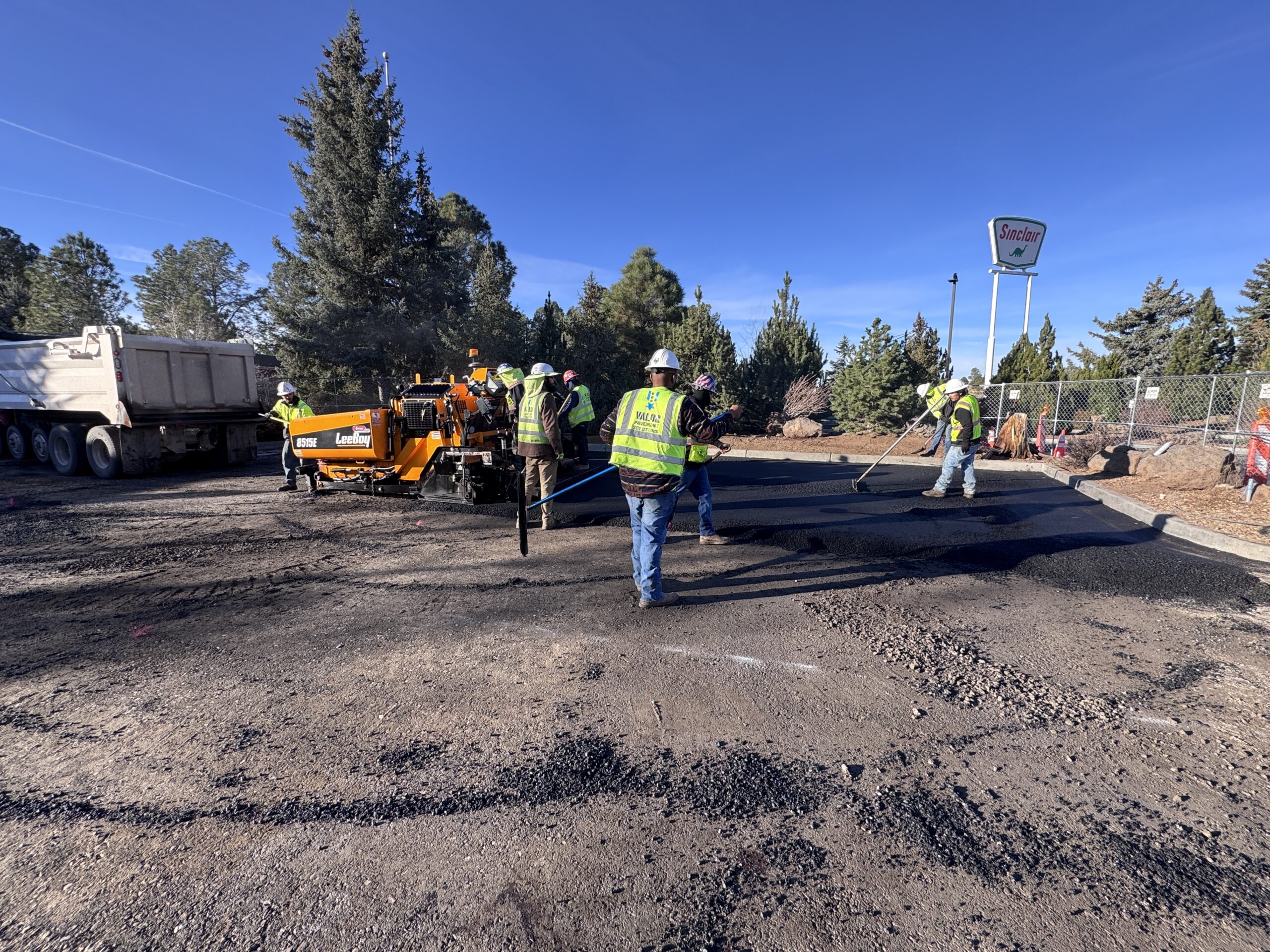
Asphalt resurfacing applies a new layer of hot mix asphalt over the existing pavement, typically 1.5 to 2 inches thick, without disturbing the base course. Full asphalt replacement removes the entire pavement structure down to the subgrade, rebuilds the base, and installs a new surface.
Asphalt resurfacing is a pavement rehabilitation method where a new layer of hot mix asphalt is applied over an existing surface that has minor to moderate distress but a structurally sound base course. Resurfacing options include standard asphalt overlay and mill-and-fill, which mills off the top layer before repaving for a flush finish. Full asphalt replacement removes the entire pavement structure, repairs or rebuilds the subgrade and base course, and installs a completely new surface. In Arizona, resurfacing typically costs $1.50 to $3.00 per square foot and lasts 8 to 15 years, while full replacement runs $4.00 to $8.00 per square foot with a 20 to 30-year lifespan (National Asphalt Pavement Association, 2025). Arizona’s extreme UV exposure and surface temperatures exceeding 150 degrees Fahrenheit accelerate oxidation, making the decision timing more aggressive than in moderate climates. Valor Pavement Solutions, a veteran-led ROC-licensed contractor, provides free pavement assessments for commercial properties across Arizona to determine which approach delivers the best return on your maintenance budget.
Asphalt Resurfacing vs. Full Replacement — What Each Option Involves
Resurfacing and replacement address different levels of pavement distress. Choosing wrong wastes money or shortens your lot’s useful life.
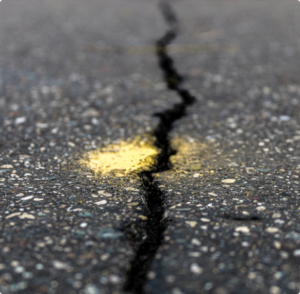
Resurfacing candidates show surface-level distress only. Longitudinal cracking, minor thermal cracking, and oxidation (the surface turning gray and brittle) indicate the wearing course is failing while the base course remains intact. If you can push a screwdriver into a crack and it stops within the top two inches, the base is likely sound.
Replacement indicators run deeper. Alligator cracking, which looks like interconnected polygonal fractures resembling reptile skin, signals subgrade failure. Standing water after rain points to drainage grade problems that resurfacing will not fix.
Rutting deeper than one inch or sections where the surface flexes under vehicle weight mean the foundation has failed.
Two resurfacing methods serve different situations. Asphalt overlay places new hot mix asphalt directly on the existing surface, adding height.
Mill-and-fill grinds off the top 1 to 2 inches before laying new material, preserving elevation and drainage grade. Mill-and-fill costs $0.50 to $1.00 per square foot more but eliminates surface cracks that would reflect through an overlay within 12 to 18 months in Arizona’s heat.
How to Decide Between Resurfacing and Full Replacement
The decision framework on the right breaks down the factors that matter for commercial property managers in Arizona.
A pavement condition assessment matters before you commit budget. A $50,000 overlay on a lot with subgrade failure will crack within 2 to 3 years. A $150,000 replacement on a lot that only needed mill-and-fill wastes capital that could fund other property improvements.
| Factor | Resurfacing / Overlay | Mill-and-Fill | Full Replacement | Best For |
|---|---|---|---|---|
| Cost per SF | $1.50 – $2.50 | $2.00 – $3.00 | $4.00 – $8.00 | Budget-constrained properties with sound base |
| Timeline | 2 – 5 days | 3 – 7 days | 2 – 4 weeks | Properties that cannot shut down for extended periods |
| Lifespan in AZ | 8 – 12 years | 10 – 15 years | 20 – 30 years | Long-term hold properties and new acquisitions |
| Surface Condition Required | Minor cracking, oxidation only | Moderate cracking, uneven surface | Any condition, including base failure | Properties with alligator cracking or subgrade issues |
| Base Repair Included | No | No | Yes, full subgrade and base rebuild | Lots with standing water, rutting, or base pumping |
| Business Disruption | Low, phased paving possible | Low to moderate | High, full closure likely | Retail and medical properties needing continuous access |
| ROI Timeline | 2 – 3 years to break even | 2 – 4 years to break even | 5 – 8 years to break even | Properties in the first 5 years of ownership |
Cost Comparison for Commercial Parking Lots in Arizona
These ranges reflect Maricopa County commercial project pricing as of 2025-2026.
The metric that matters for capital planning: cost per year of useful life. A $100,000 mill-and-fill lasting 12 years costs $8,333 per year, while a $200,000 replacement lasting 25 years costs $8,000 per year. The replacement delivers marginally better long-term value, but it ties up twice the capital upfront.
Explore Valor Pavement’s commercial asphalt paving services for a detailed look at resurfacing and replacement options.
Resurfacing costs:
- Standard overlay: $1.50 to $2.50 per square foot
- Mill-and-fill: $2.00 to $3.00 per square foot
- Crack sealing and prep: $0.15 to $0.30 per square foot
Full replacement costs:
- Demolition and removal: $0.75 to $1.50 per square foot
- Subgrade preparation and base course: $1.50 to $3.00 per square foot
- New hot mix asphalt surface: $2.00 to $3.50 per square foot
- Total: $4.00 to $8.00 per square foot
Example: 40,000 square foot commercial parking lot
- Overlay: $60,000 to $100,000
- Mill-and-fill: $80,000 to $120,000
- Full replacement: $160,000 to $320,000
How Phoenix Heat Affects the Resurfacing vs. Replacement Decision
Every national guide about parking lot resurfacing assumes moderate climate conditions. Arizona is not moderate.
Asphalt surface temperatures in the Phoenix metro regularly exceed 150 degrees Fahrenheit from May through September. Three factors shorten the pavement lifecycle:
- Accelerated oxidation. UV breaks down the asphalt binder faster here than anywhere in the lower 48. A surface that lasts 15 years in the Midwest shows oxidation within 5 to 7 years in Maricopa County.
- Thermal expansion stress. Daily temperature swings of 40 to 50 degrees create expansion and contraction cycles that propagate cracks faster than moderate climates.
- Subgrade desiccation. The desert soil loses moisture steadily, then monsoon rains arrive all at once. That sudden moisture shift causes the subgrade to move — base failures that surface cracking alone would never explain.
The practical impact: resurfacing windows are shorter in Arizona. A lot that looks serviceable in spring may show alligator cracking by October after a summer of thermal stress and monsoon moisture cycles. If a pavement condition assessment shows borderline results, the cost-effective move is usually to resurface now rather than wait another year.
The Assessment Checklist for Property Managers
Use this checklist before calling a contractor. It gets you walking the lot with purpose and gives you the data to hold bidders accountable.
Walk the lot and document:
- Crack patterns: isolated longitudinal cracks (resurfacing candidate) vs. alligator cracking (replacement indicator)
- Standing water 48 hours after rain (drainage grade failure, replacement territory)
- Rutting depth: under one inch (resurfacing possible) vs. over one inch (base failure likely)
- Surface flex under vehicle weight (press on the pavement edge near cracks — movement means base failure)
- Patch count: more than 20% of the surface patched indicates the lot has been band-aided past its useful life
Assess your timeline:
- Hold period under 10 years: resurfacing delivers better cash flow
- Hold period over 15 years or preparing for sale: full replacement adds property value
- Tenant lease renewals within 12 months: phased resurfacing avoids disruption
Get the right contractor assessment:
- Require core sampling, not just visual inspection
- Ask for drainage evaluation with grade measurements
- Verify the contractor is ROC-licensed in Arizona
- Get at least three quotes with identical scope (material thickness, prep work, striping, warranty)
Frequently Asked Questions About Asphalt Resurfacing and Replacement
Base condition tells you which route to take. If surface cracking is isolated to the top layer and the base course is structurally sound, resurfacing is typically sufficient. If you see alligator cracking, standing water, rutting deeper than one inch, or sections where the surface flexes under vehicle weight, full replacement is necessary because the subgrade has failed.
A qualified ROC-licensed contractor can perform a pavement condition assessment that includes visual inspection, core sampling, and drainage evaluation. In Arizona, timing matters because summer heat can mask base issues that emerge later in the thermal cycle — a lot that appears stable in January may show base failure by July. Core sampling removes the guesswork by revealing the actual condition of each pavement layer. For commercial properties, the difference between a $80,000 resurfacing and a $200,000 replacement makes a professional assessment one of the highest-ROI steps in any parking lot maintenance plan.
explore our recent
blog & news articles

Whether asphalt resurfacing vs. replacement is the right call depends entirely on what is happening below the surface. A smooth-looking lot can hide base failure, and an ugly lot with surface cracks might only need a mill-and-fill to run another 10 to 15 years. Skip the guesswork. Schedule a free pavement assessment with Valor Pavement Solutions and get a data-backed recommendation for your commercial property.
Request a Quote