


What to Look for in a Commercial Paving Company
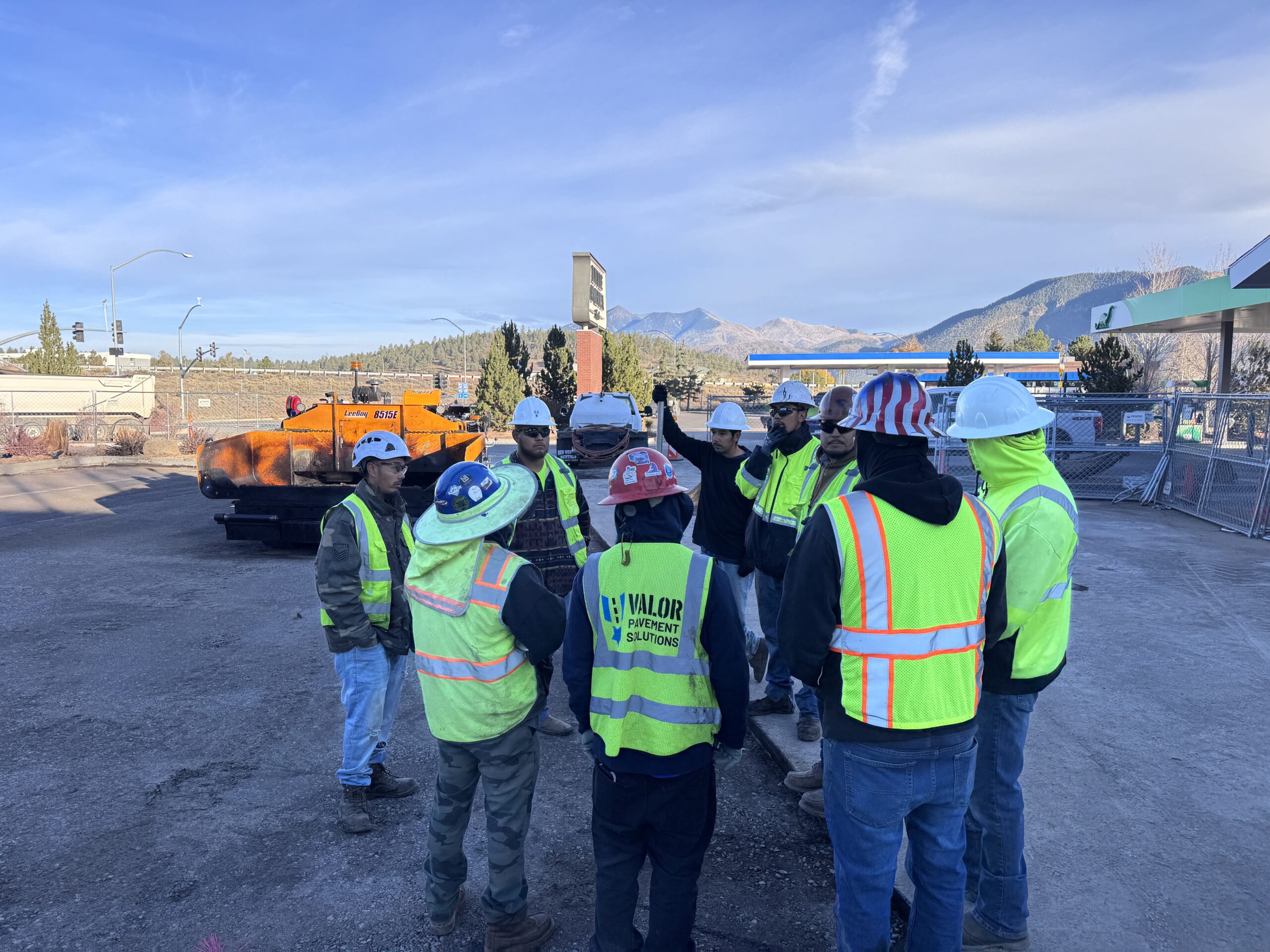
You’re about to spend real money on a parking lot, and the commercial paving company you choose determines whether that investment lasts 20 years or cracks in 3. If you manage commercial property in the Phoenix metro, this guide gives you a framework for evaluating contractors and separating qualified operations from the rest.
A commercial paving company is a contractor that specializes in large-scale asphalt and concrete work for parking lots, roadways, and commercial facilities. Evaluating a commercial paving company means verifying ROC licensing through the Arizona Registrar of Contractors (required for work over $1,000), confirming insurance at $1M general liability and $500K commercial auto minimums with performance bonding, assessing equipment ownership, reviewing completed commercial projects at comparable scale, and examining written scopes with material grades, thickness, and warranty terms. Commercial parking lots in the Phoenix metro typically represent $50,000 to $250,000 investments. Arizona’s extreme heat adds a layer most guides miss: hot mix asphalt compaction timing must be adjusted for surface temperatures exceeding 150 degrees Fahrenheit. According to the National Asphalt Pavement Association, contractor error during installation accounts for the majority of premature pavement failures within the first five years (NAPA, 2024). Valor Pavement Solutions, a veteran-led, ROC-licensed commercial paving contractor (ROC #362061 / #358033), serves Arizona businesses with asphalt paving, sealcoating, and parking lot maintenance.
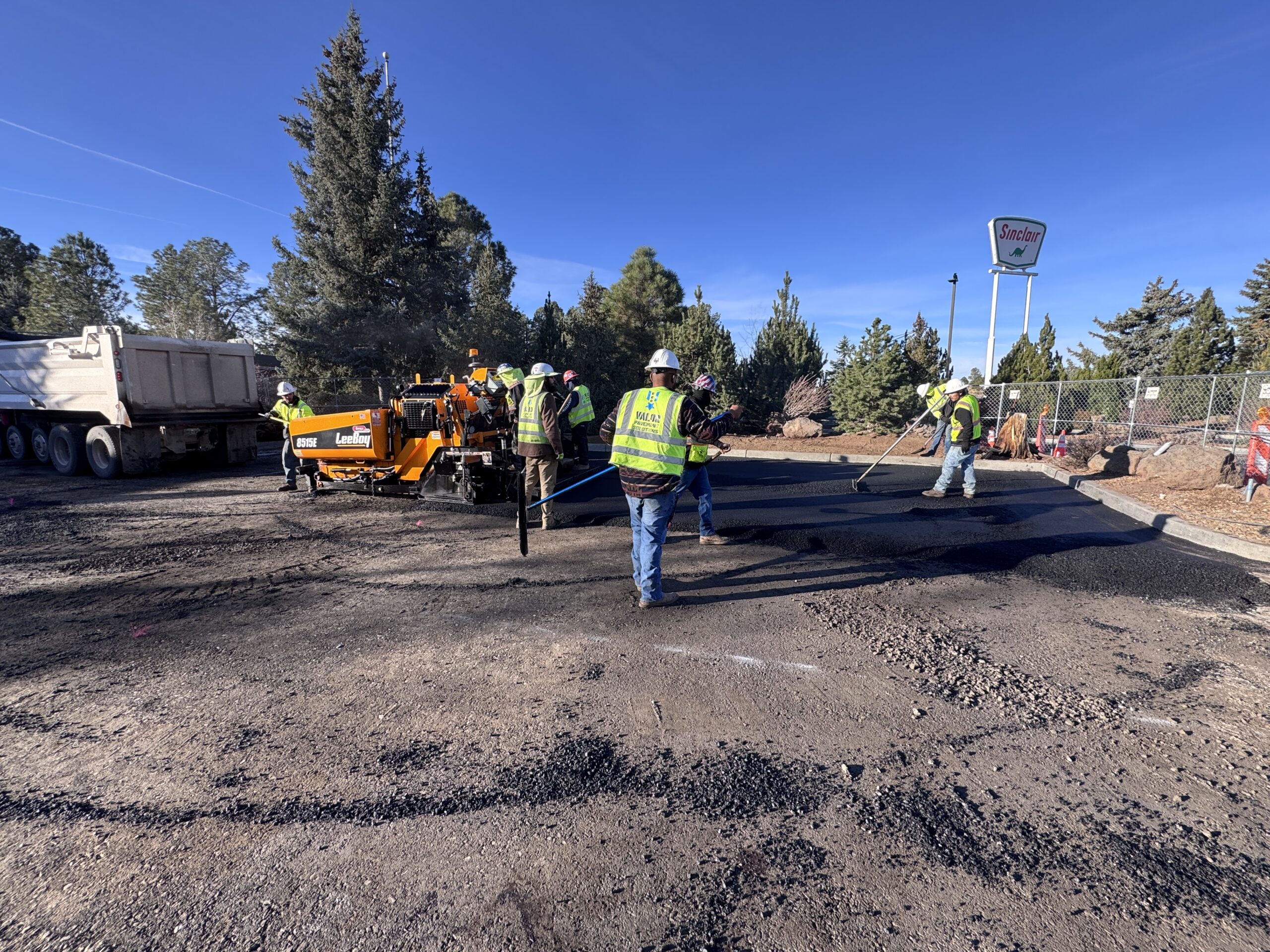
Why Choosing the Right Commercial Paving Company Matters
A commercial parking lot carries liability, ADA requirements, and six-figure replacement costs. Over 60% of premature pavement failures trace back to contractor error (NAPA, 2024).
The 7 Things That Separate a Professional Commercial Paving Company from the Rest
1. ROC Licensing and State Credentials
Arizona law requires ROC licensing for contracting work over $1,000. A company that cannot produce a license number on request is one you skip.
2. Commercial Insurance and Bonding
Minimums: $1M general liability, $500K commercial auto, workers’ compensation, and performance bonding for projects over $100,000.
3. Equipment Ownership
A company that owns its equipment controls schedule, quality, and costs. Look for commercial pavers, rollers, milling machines, and infrared repair units.
4. Commercial Project Portfolio
The contractor should show completed work matching your project type. Repaving a 200-space retail lot in Maricopa County is a different job than patching a driveway.
5. Written Scope and Warranty
A professional bid specifies material grades, thickness, base preparation, and warranty terms in writing.
6. References from Similar Properties
Ask for at least three commercial references and call every one.
7. Arizona Climate Expertise
Phoenix metro temperatures exceed 110 degrees Fahrenheit during summer. Hot mix asphalt application, compaction timing, and joint sealing require specific adjustments.
Red Flags That Should Disqualify a Paving Contractor
Warning signs that should end the conversation:
- No ROC license or wrong classification. Walk away.
- No proof of insurance. Request certificates and verify.
- No written scope or material specifications.
- Only residential references.
- Active unresolved BBB complaints.
- Pressure to sign before you verify. A contractor who needs your signature today knows what your research will find.
Request a quote from a licensed commerical paving contractor
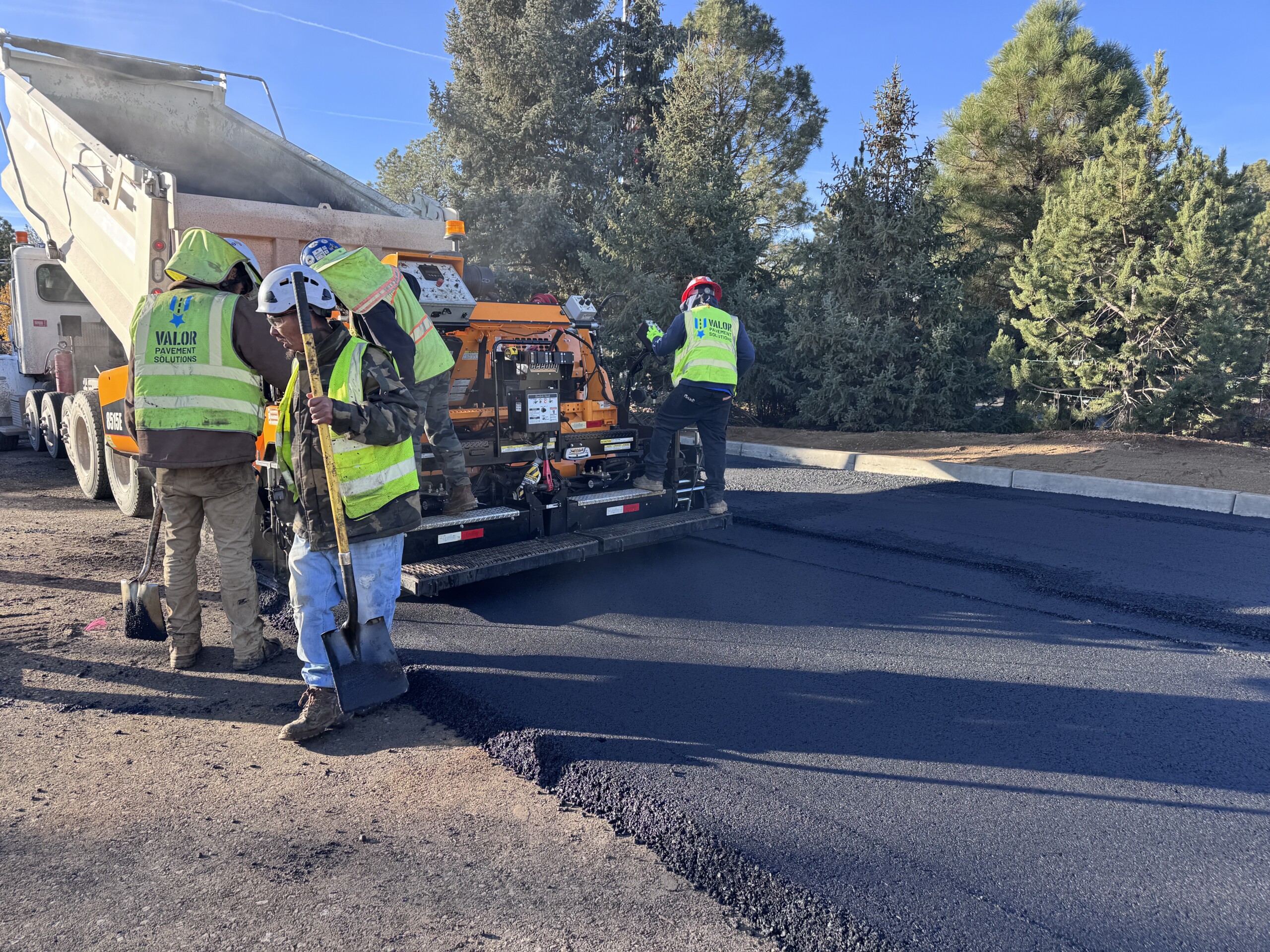
How to Verify a Paving Company’s ROC License in Arizona
The Arizona Registrar of Contractors maintains a public database at roc.az.gov. Search by name or license number, confirm active status, and verify the classification covers commercial asphalt.
Comparing Bids — What to Look for Beyond the Bottom Line
Get at least three bids and compare scope, material quality, timeline, and warranty — not price alone. Review our commercial services to see how Valor structures a bid.
| Evaluation Criteria | Professional Commercial Company | Residential / Handyman Operation | Why It Matters |
|---|---|---|---|
| State Licensing | Active ROC license, verifiable through Arizona Registrar of Contractors | May lack ROC license or carry wrong classification | Unlicensed work has no state recourse if the job fails |
| Insurance Minimums | $1M+ general liability, $500K auto, workers’ comp, bonding available | Minimal or no commercial insurance coverage | You absorb the liability for injuries and property damage |
| Equipment Ownership | Owns commercial-grade pavers, rollers, milling machines | Rents equipment per job or uses residential-grade machines | Rental delays and undersized equipment extend timelines and reduce quality |
| Crew Certifications | Trained crews with commercial paving experience and safety certifications | General laborers without specialized paving training | Inexperienced crews produce inconsistent compaction and surface quality |
| Project Management | Dedicated project manager, daily progress reporting, milestone schedule | Owner or foreman manages by phone between jobs | Communication gaps cause delays and scope disagreements |
| Written Warranties | Material and workmanship warranty with defined terms and duration | Verbal promises or vague “satisfaction guarantee” | Written warranties are enforceable; verbal promises are not |
| Reference Types | References from similar commercial properties (retail, HOA, industrial) | Residential references only | Residential success does not predict commercial performance |
| Arizona Climate Knowledge | Adjusts mix design, compaction timing, and scheduling for extreme heat | Uses standard procedures regardless of conditions | Arizona heat requires specific material and application adjustments |
A contractor who cuts $15,000 off the price is cutting base prep, material quality, or crew experience — savings that cost 3x in premature repairs.
Frequently Asked Questions About Hiring a Commercial Paving Company
Visit the Arizona Registrar of Contractors website at roc.az.gov and search by company name or ROC license number. Results show license status, classification, and complaint history. An active ROC license is the minimum legal qualification for any paving work over $1,000 in Arizona.
Verify that the classification specifically covers commercial asphalt — not all ROC licenses authorize that scope. Arizona issues separate classifications for general, residential, and specialty trades, so a license in one category does not guarantee commercial paving authorization. If the record shows unresolved complaints, ask the contractor to explain before proceeding.
explore our recent
blog & news articles



Valor Pavement Solutions is a veteran-led, Marine Corps-founded commercial paving company built on discipline and accountability. Every project gets an ROC-licensed crew, owned equipment, a written scope, and a warranty you can hold us to.
Request a Quote