


Asphalt Maintenance Cost: Why Preventive Maintenance Wins Over Full Repairs
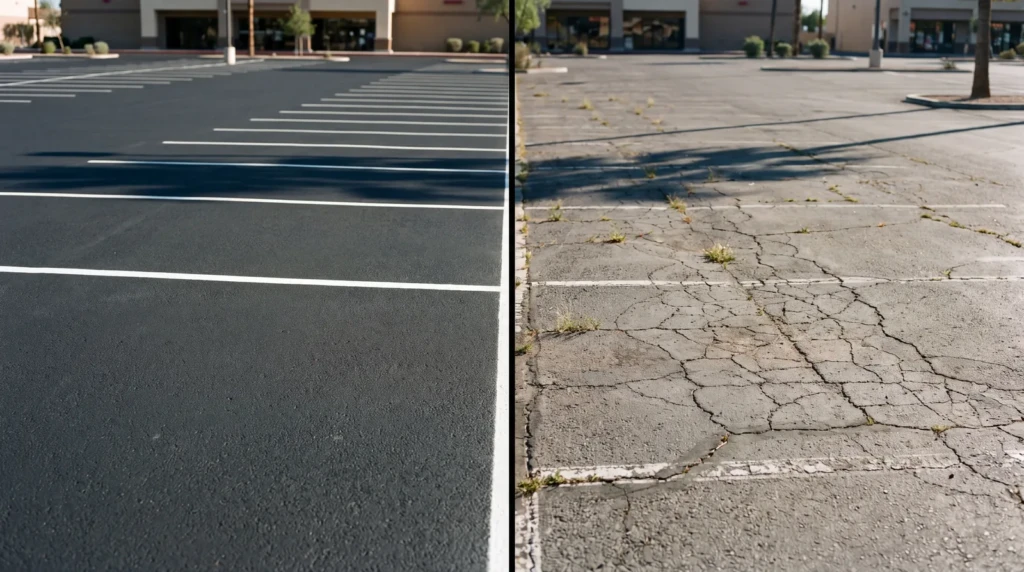
When budgets tighten, maintenance is the line item that looks easiest to cut. The lot still works, the cracks are small, and the money is needed elsewhere. That logic holds until the lot needs more than maintenance.
Preventive asphalt maintenance costs less than repairs because pavement fails on a curve, not a line. A surface stays serviceable with low-cost treatments for years, then declines steeply once water reaches the base and traffic loads work it, and the repair moves from the surface into the structure. Timing sets which treatments are still available.
Whether you’re managing a commercial center, a municipal facility, or an industrial yard, your pavement is on that curve now, and its position decides whether the budget is a routine operating line, a budgeted repair, or a capital project.
Why Asphalt Maintenance Costs Follow a Curve, Not a Line
Owners who intervene early, usually with sealcoating and scheduled surface care, keep their lots on the flat part of the deterioration curve, where the work stays on the operating line. Deferred maintenance never pauses that curve. It meets it lower down, where the work is heavier and the budget category changes with it.
This is life-cycle cost in plain terms. The cheapest pavement is the one whose owner intervenes early. The boundary is just as plain. Maintenance slows deterioration and extends pavement life, but nothing stops the curve. A lot that has reached base failure doesn’t sealcoat its way back.
What Preventive Maintenance Actually Includes
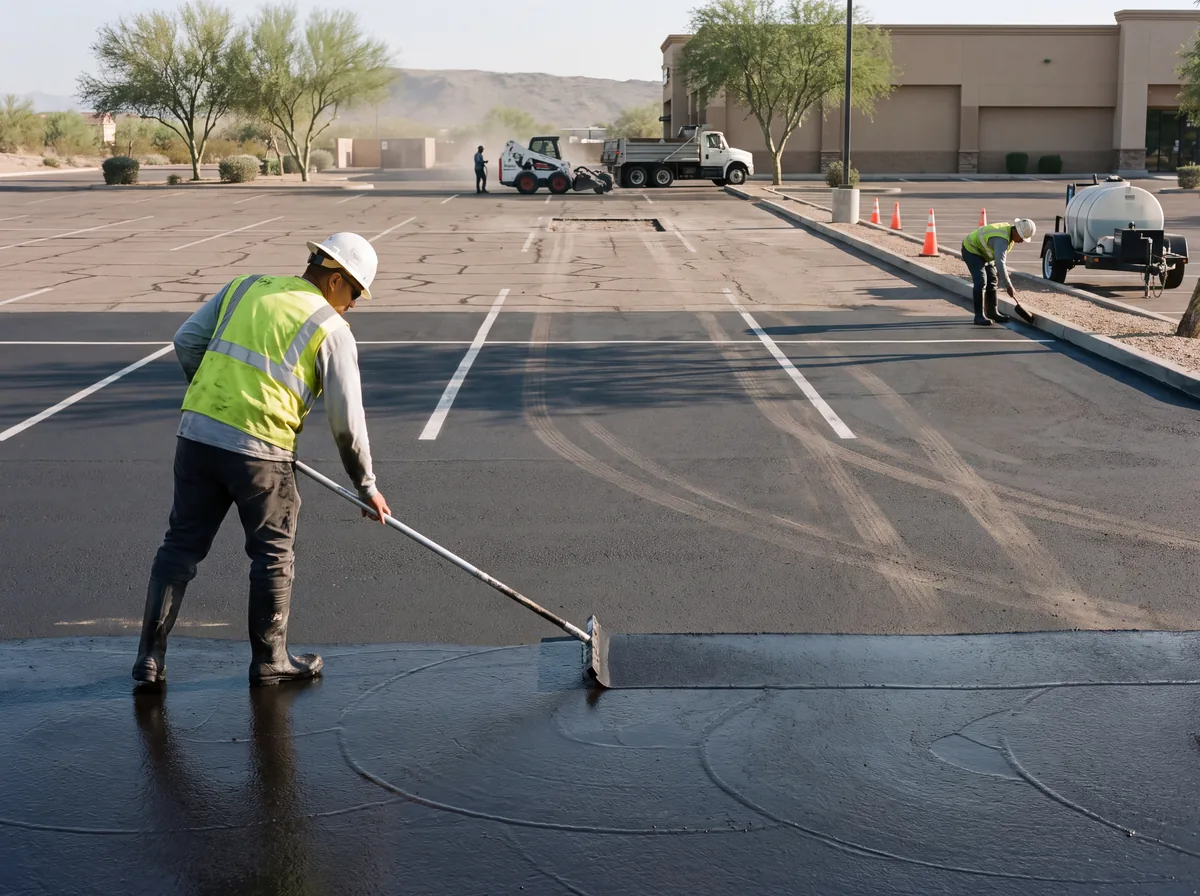
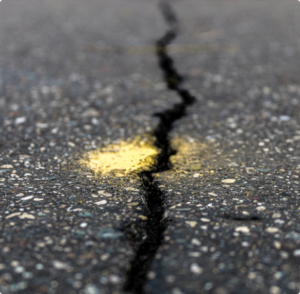
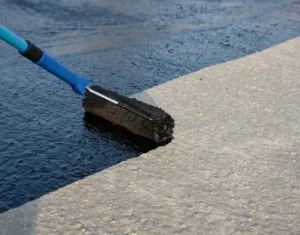
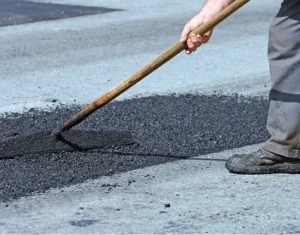
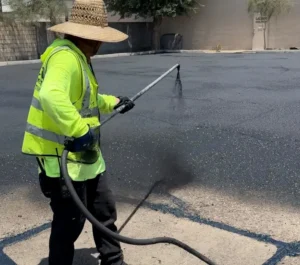
The work runs in a set order. Patching comes first, where isolated failures need repair, then crack sealing, then sealcoating over the sound, sealed surface. Crack sealing takes isolated cracks between ¼ inch and 1.5 inches, and in Arizona it belongs in the cooler months before monsoon season, because water through open cracks converts surface wear into base failure. Sealcoating is the sacrificial barrier that slows the UV-driven oxidation that ages a sound surface.
The industry calls this discipline pavement preservation. When Valor’s saw opens a lot that skipped it, the base underneath tells the story. That’s the moment “we’ll just sealcoat it” stops being an option, and crack sealing or patching becomes the floor, not the ceiling. Past that point, an asphalt overlay only works where the base is still sound.
Maintenance vs. Waiting: What Each Path Costs
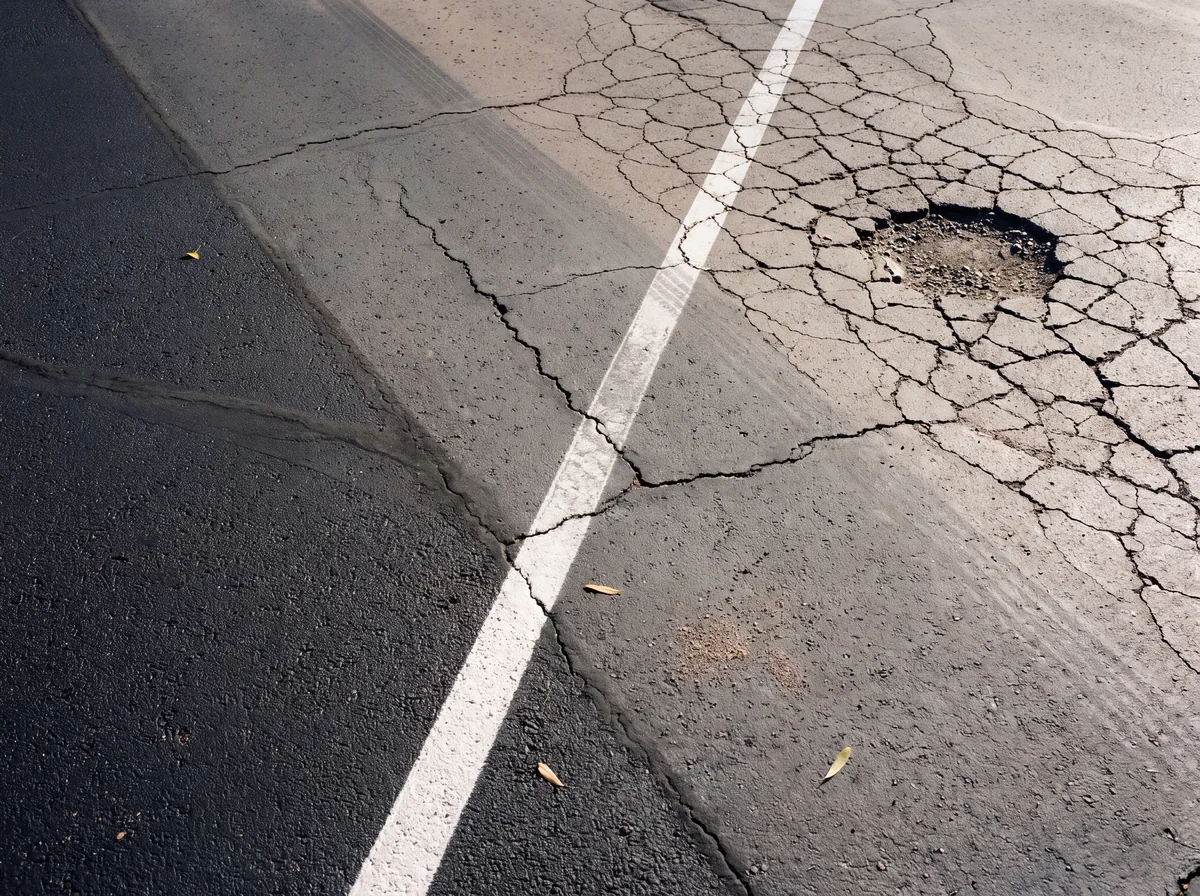
Every lot sits somewhere on this table, and parking lot maintenance cost tracks the row. Waiting only ever changes the category, never the direction.
| Curve stage | What you’re seeing | Typical treatment (set by condition assessment) | Budget category |
| Early (surface aging) | Fading, early surface wear | Sealcoat; crack seal once isolated cracks reach the sealable band (¼”–1.5″) | Routine operating line |
| Mid (cracking spreads) | Block cracking, isolated failures, base still sound | Patching and crack seal; overlay only where the base is structurally sound | Budgeted repair |
| Late (base compromised) | Alligator cracking, soft spots, rutting where the base has moved | Full-depth replacement or reconstruction | Capital project |
What a Maintenance Program Looks Like for a Commercial Lot
A program for pavement maintenance in Arizona runs on three habits: an annual condition walk, crack sealing whenever cracks reach the eligible band, and sealcoat cycles set by the assessment. Sealcoat typically cures within 24–48 hours in Phoenix under normal conditions, with vehicle traffic off for at least the first 24.
For a property manager, the value is what this does to the budget conversation. A program defers the capital event and makes the years in front of it plannable, with numbers a committee can approve, sequenced across a seasonal maintenance plan instead of arriving all at once.
Frequently Asked Questions
On the early curve, yes. Sealcoating slows the UV-driven oxidation that ages a surface, at operating-line prices. As a rescue for a failed base, no. Sealcoating protects sound asphalt. It doesn’t repair structural problems, and an honest assessment tells you which one your lot needs.
explore our recent
blog & news articles

An assessment places your lot on the curve and prices the program. Whether you're responsible for one commercial property or a portfolio of them, knowing your asphalt maintenance cost before the budget cycle beats discovering it after a failure. Valor Pavement Solutions holds Arizona ROC #362061 and #358033. Request a quote or schedule an assessment, and start on the flat part of the curve.
Request a Quote