


How Often Should You Sealcoat or Re-Stripe a Commercial Lot?
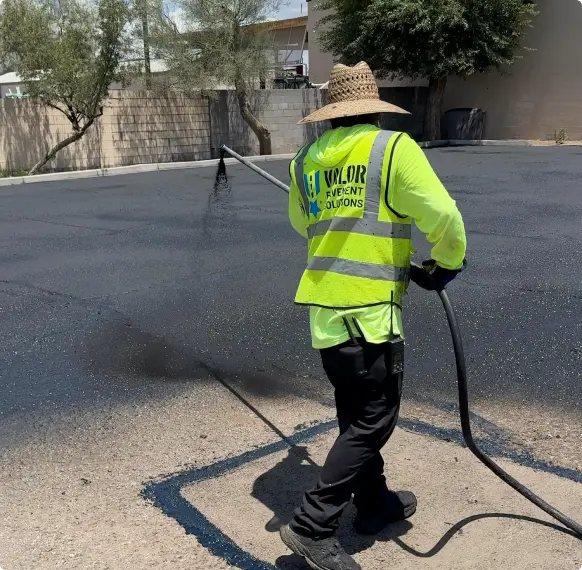
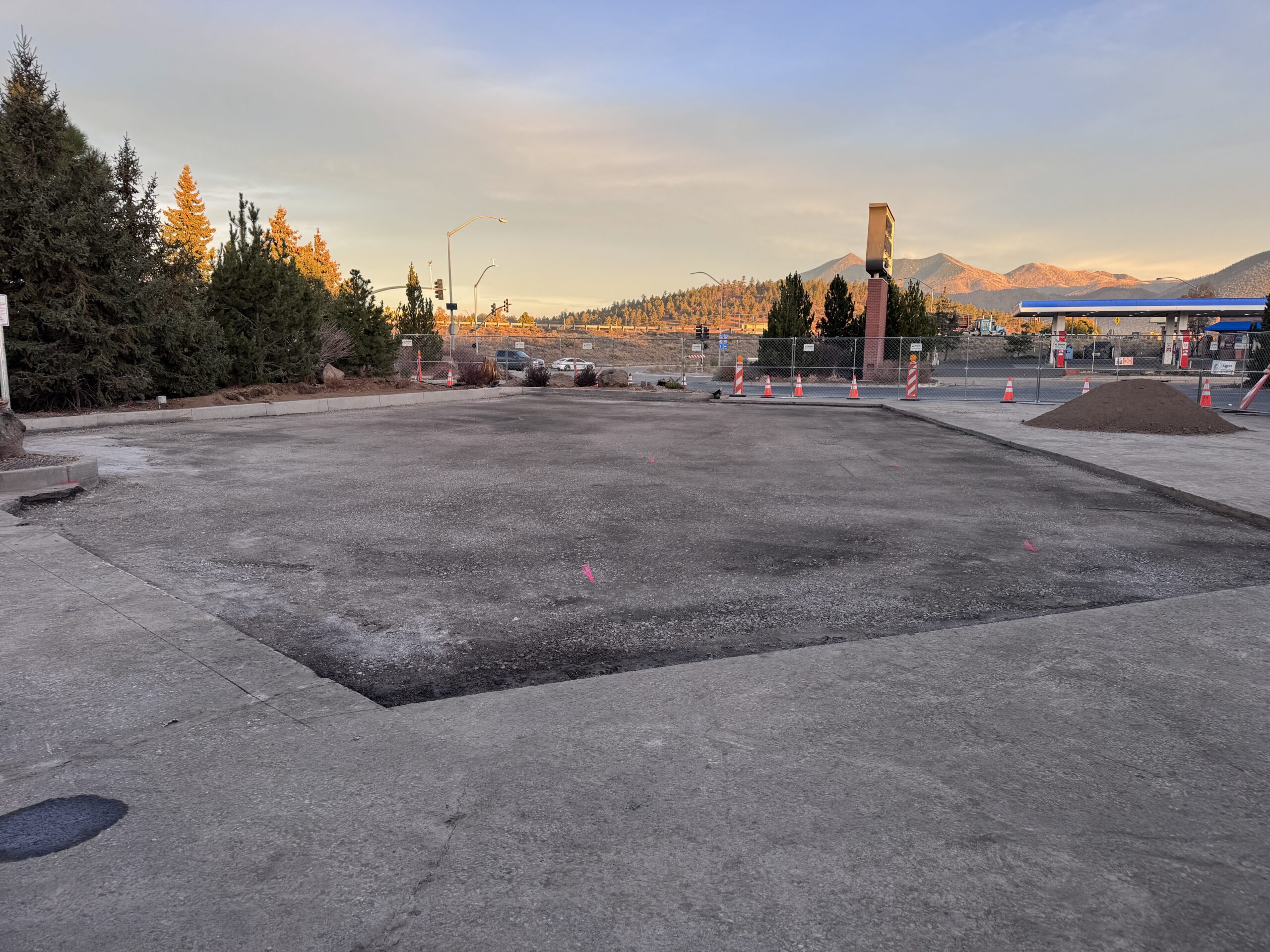
Deciding how often sealcoat parking lot surfaces in Arizona determines long-term pavement costs.
Commercial parking lots in Arizona need sealcoating every 2-3 years and re-striping every 12-18 months under high-traffic conditions in the Phoenix metro. The Sonoran Desert’s extreme UV index and 300+ sunny days per year compress both intervals compared to national averages. A sealcoating and maintenance program built around Arizona’s UV exposure and seasonal windows keeps lot costs predictable and pavement structurally sound.
Commercial sealcoating frequency for parking lots depends on traffic volume, sun exposure, and climate severity. Arizona commercial lots require sealcoating every 2-3 years, with intervals compressing to 18-24 months for lots under full sun with 500+ daily vehicle trips. Re-striping follows traffic-based cycles of 8-24 months. The Sonoran Desert’s 300+ sunny days per year and UV index at extreme levels for 5-6 continuous months accelerate asphalt binder breakdown faster than temperate climates, based on accelerated weathering field observations in Sonoran Desert conditions. Unprotected lots lose measurable binder flexibility within 18-24 months of the last sealcoat application. A sealcoat maintenance program at $0.15-$0.35 per square foot per cycle prevents premature resurfacing at $1.50-$3.00 per square foot or full replacement at $4.00-$8.00 per square foot.
Valor Pavement Solutions, a veteran-led and ROC-licensed commercial paving contractor (ROC #362061 / #358033), builds maintenance calendars calibrated to Phoenix metro climate data and traffic patterns.
Request a free pavement assessment to start your schedule.
Sealcoating Frequency — The Rule of Thumb
Commercial sealcoating follows a 2-3 year national baseline. Arizona lots in the Phoenix metro often need sealcoating every 18-24 months depending on traffic volume, sun exposure, and existing sealcoat condition.
Phoenix averages 300+ sunny days per year with the UV index at extreme levels (11+) for 5-6 continuous months. Desert UV exposure accelerates binder breakdown faster than in temperate climates, based on accelerated weathering field observations in Sonoran Desert conditions. Pavement surfaces reach 150-170 degrees Fahrenheit during peak summer, causing binder volatilization and oxidation.
Full sun exposure, south-facing orientation, and softer PG binder grades shorten the cycle. Heavy truck and loading dock traffic requires 12-18 month cycles — petroleum and hydraulic fluid exposure breaks down sealcoat faster than tire wear alone.
Partial shade, lower traffic, and polymer-modified sealcoat extend the cycle. For a deeper breakdown, see our complete guide to commercial sealcoating.
| Traffic Volume | Moderate Climate (Shaded / North-Facing) | Full Arizona Sun Exposure |
| Low (under 200 vehicles/day) | Every 3 years | Every 2-2.5 years |
| Medium (200-500 vehicles/day) | Every 2-3 years | Every 2 years |
| High (500+ vehicles/day) | Every 2 years | Every 18-24 months |
| Heavy truck traffic (loading docks, distribution) | Every 18-24 months | Every 12-18 months |
Re-Striping Frequency by Traffic Volume
Parking lot striping in Phoenix wears faster than sealcoat degrades — traffic abrasion, not UV, is the primary wear mechanism.
Intervals range from 8-12 months for high-traffic lots to 18-24 months for low-traffic properties. Accessible parking markings and crosswalks degrade fastest due to concentrated traffic.
ADA accessible parking symbols, access aisles, and van-accessible signage must remain clearly visible per ADA Standards for Accessible Design (Section 502). ADA compliance is a federal requirement — enforcement comes through DOJ complaints and private lawsuits, not county-level code enforcement.
| Traffic Volume | Re-Striping Interval (Traffic Paint) | Re-Striping Interval (Thermoplastic) |
| Low (under 200 vehicles/day) | Every 18-24 months | Every 36-48 months |
| Medium (200-500 vehicles/day) | Every 12-18 months | Every 24-36 months |
| High (500+ vehicles/day) | Every 8-12 months | Every 18-24 months |
Arizona-rated thermoplastic markings last 2-3x longer than traffic paint ($0.35-$0.75 vs $0.10-$0.25 per linear foot), with costs narrowing over 5 years due to fewer applications. Visit our parking lot striping services page for details.
Arizona-Specific Timing Considerations
Sealcoating in Phoenix requires scheduling around two application windows: March through May and September through mid-November.
Manufacturer specifications require ambient air temperature between 50 and 90 degrees Fahrenheit and rising, with surface temperature below 130 degrees. Spring meets these conditions with low humidity and reliable dry cure time. The fall window opens after monsoon season ends, with temperatures dropping into cure range by October.
Summer sealcoating fails in Phoenix — ambient temperatures of 95-105 degrees push surface temperatures above 130 degrees, and sealcoat flash-dries before bonding.
Monsoon season from July through mid-September adds moisture risk — water trapped under fresh sealcoat causes delamination. Re-striping can be performed year-round but should follow sealcoat by 24-48 hours cure time. Fall is the best window to coordinate both services in a single mobilization.
Building a Maintenance Schedule That Works
Pavement maintenance in Arizona follows a year-by-year calendar from paving through the full service life of the lot.
Year 1: No sealcoat. Fresh asphalt needs 90 days minimum (6-12 months preferred) to cure and off-gas before sealcoat bonds properly. Initial striping at paving completion.
Year 2: First sealcoat application during the spring or fall window. Re-stripe after the sealcoat cures.
Year 3-4: Monitor sealcoat condition. Re-stripe based on traffic volume. Crack seal before monsoon season.
Year 5: Second sealcoat cycle. Inspect for base issues, drainage, or ADA marking degradation.
Year 6-7: Third sealcoat cycle. Budget for patching at loading docks and turning lanes.
Year 8-10: Fourth sealcoat cycle. Assess whether the lot remains sealcoat-eligible or resurfacing is approaching.
Year 10+: Decision point — continue the sealcoat program or plan for mill-and-fill or overlay.
The full maintenance plan for Arizona properties breaks down each interval with budget projections. Cost per square foot for the Phoenix metro:
- Sealcoating: $0.15-$0.35/sq ft per application ($0.15 floor applies mainly to lots of 100,000+ sq ft)
- Striping: $0.10-$0.25 per linear foot for traffic paint; $0.35-$0.75 for Arizona-rated thermoplastic
- Crack sealing: $0.50-$1.50 per linear foot
- Resurfacing (mill-and-fill or overlay): $1.50-$3.00/sq ft
- Full replacement: $4.00-$8.00/sq ft
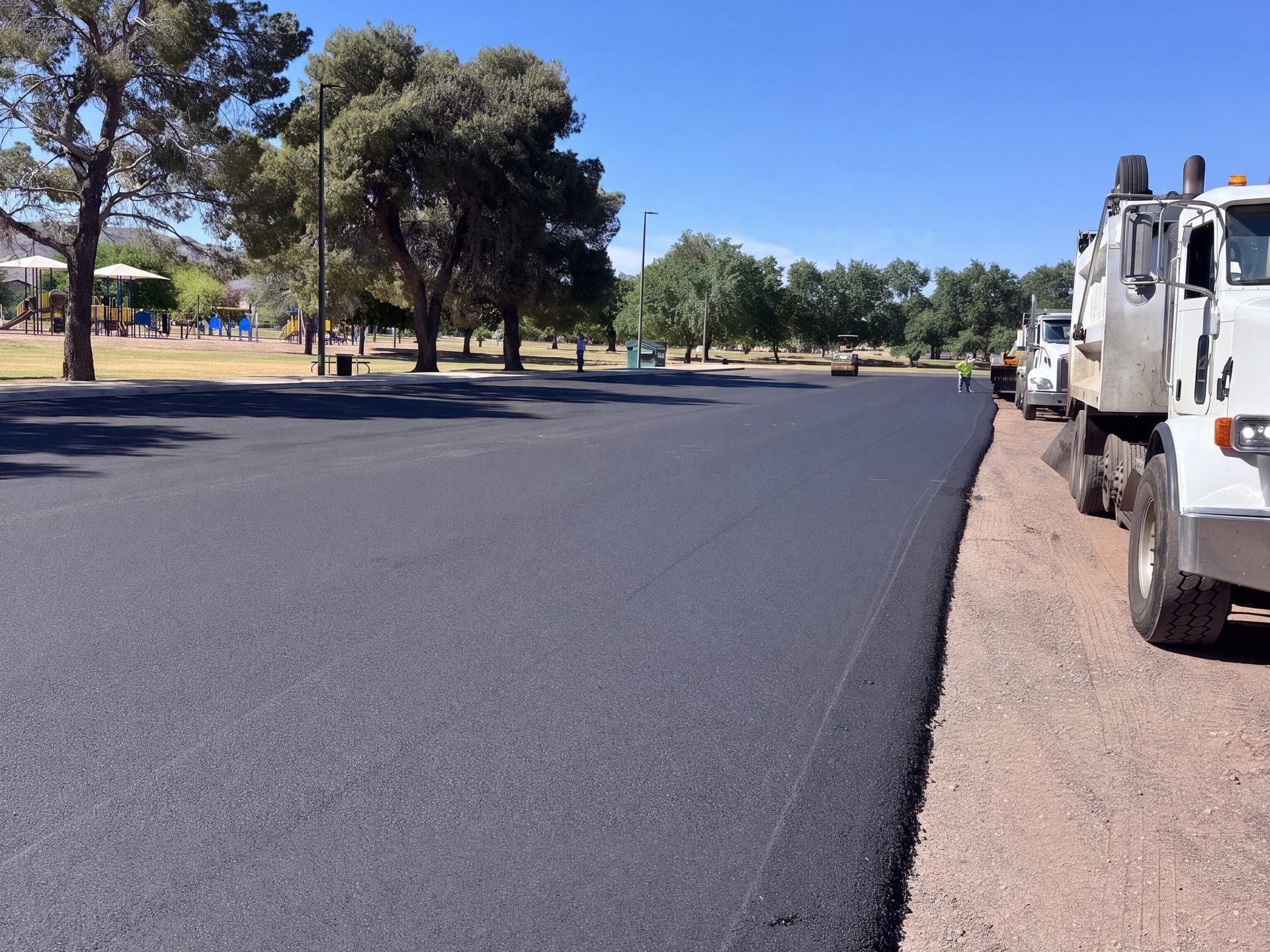
Maintenance Program vs. Deferred Maintenance Cost Comparison
*Assumes a 50,000 sq ft commercial lot in Phoenix metro.*
| Cost Category | Maintained — 5 Years | Deferred — 5 Years | Maintained — 10 Years | Deferred — 10 Years |
| Sealcoating | $15,000-$17,500 | $0 | $30,000-$35,000 | $0 |
| Striping | $3,000-$4,500 | $1,500-$2,000 | $6,000-$9,000 | $3,000-$5,000 |
| Crack sealing | $2,000-$4,000 | $0 | $5,000-$10,000 | $0 |
| Patching / spot repair | $1,000-$3,000 | $5,000-$10,000 | $3,000-$8,000 | $15,000-$25,000 |
| Resurfacing | $0 | $0 | $0 | $75,000-$150,000 |
| Total | $21,000-$29,000 | $6,500-$12,000 | $44,000-$62,000 | $93,000-$180,000 |
| Lot condition | Sound; 10-15 more years of service | Oxidized; resurfacing imminent Year 6-8 | Sound; 10+ more years | Resurfaced at high cost |
*The $75K-$150K resurfacing range reflects variance in mill depth (1.5 to 3 inches) and base repair extent.*
A sealcoating program delivers the lowest cost per year of life for lots still in sound structural condition.
Multi-Property Portfolio Scheduling Tips
Property managers overseeing multiple locations can smooth budgets by staggering maintenance — sealcoating 2-3 properties per year instead of all 5-8 in the same cycle distributes $40,000-$80,000 in annual spend across fiscal years.
A single contractor handling all services can reduce costs by 10-20%, depending on total square footage under contract and scheduling flexibility.
Schedule assessments for all properties during January and February, with priority scoring by traffic volume, last sealcoat date, and tenant lease renewal dates. Lock in fall pricing 60-90 days in advance.
Request a portfolio-wide pavement assessment to consolidate your maintenance calendar across all locations.
Frequently Asked Questions — How Often Sealcoat Parking Lot and Re-Stripe
Every 2-3 years is the standard interval for commercial parking lots. Arizona lots with heavy traffic or full sun exposure often need sealcoating every 18-24 months. The interval depends on traffic volume, lot orientation, and the condition of the existing sealcoat layer.
The Sonoran Desert’s extreme UV index for 5-6 continuous months accelerates binder breakdown faster than temperate climates. Visual indicators include color fading from black to gray and fine aggregate visible on the surface. Polymer-modified sealcoat extends the interval by 6-12 months.
explore our recent
blog & news articles
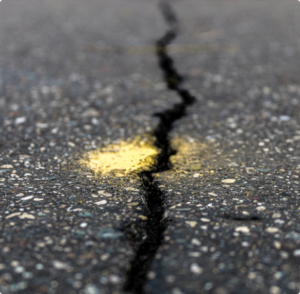
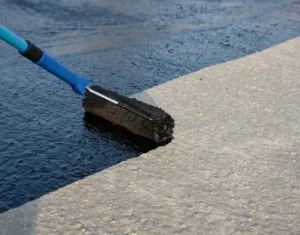
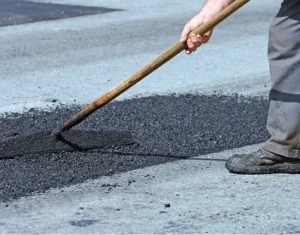
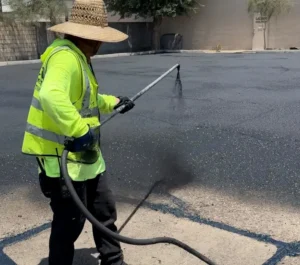
How often sealcoat parking lot surfaces depends on your specific conditions, but plan on every 2-3 years (compressed in Arizona for full-sun lots) and re-stripe at 8-24 month intervals during the spring or fall windows. Valor Pavement walks your property, documents current condition, and builds a maintenance calendar with cost projections -- including multi-property portfolio assessments ranked by condition urgency. Valor Pavement Solutions is a veteran-led, ROC-licensed commercial paving contractor (ROC #362061 / #358033) specializing in sealcoating, parking lot striping, and pavement maintenance across the Phoenix metro. Whether you need guidance on how often sealcoat parking lot pavement or a complete re-striping schedule, request a free pavement assessment from Valor Pavement Solutions.
Request a Quote