


How Arizona Heat Asphalt Damage Happens — and What To Do About It
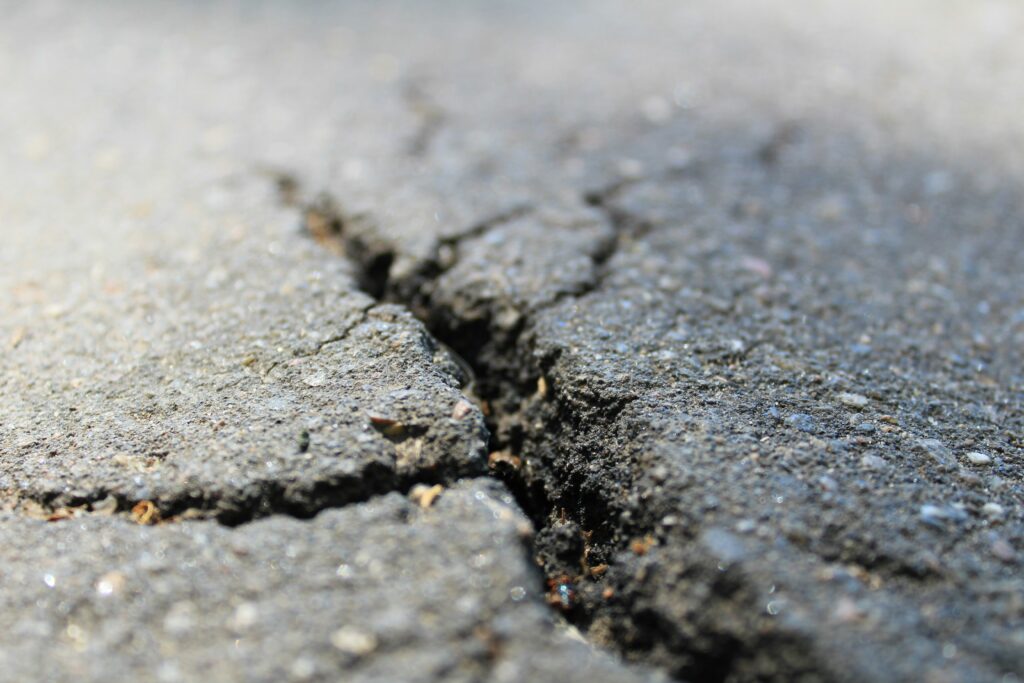
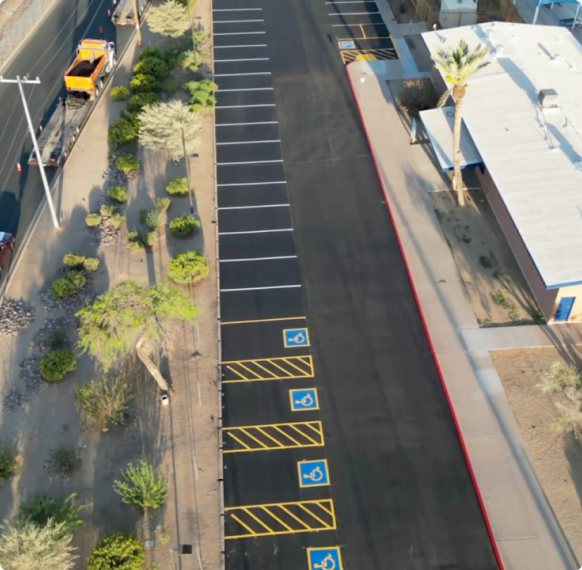
Arizona heat damages commercial asphalt through three concurrent mechanisms — and each one accelerates the others. UV radiation degrades asphalt binder. Thermal expansion cracks the surface. Heat-accelerated oxidation hardens the mix until it fails. Property managers who understand these forces can protect their commercial asphalt paving in Phoenix investment with the right materials, timing, and maintenance calendar.
Arizona heat asphalt damage is the accelerated deterioration of bituminous pavement driven by the Sonoran Desert’s climate. UV radiation breaks carbon-hydrogen bonds in asphalt binder. Lighter aromatic compounds volatilize, and the binder progressively hardens. Thermal cycling — daily surface temperature swings of 60-80F repeated 150 or more days per year in the Phoenix metropolitan area — forces expansion and contraction that exceeds the tensile strength of standard asphalt mixes. Sustained surface temperatures above 150F accelerate oxidation, compounding UV damage. The oxidation rate approximately doubles with every 15-20F increase in sustained surface temperature. Unmanaged heat damage shortens pavement lifespan by 8-10 years, disrupts capital planning cycles, and creates trip-and-fall liability from surface failures. Valor Pavement Solutions, a veteran-led and ROC-licensed commercial paving contractor (ROC #362061 / #358033), specializes in Arizona-specific pavement maintenance for all three degradation mechanisms. Phoenix metro commercial lots without proactive maintenance typically lose 5-10 points on the Pavement Condition Index per year, depending on traffic and exposure.
How UV Radiation Breaks Down Asphalt Binder
UV radiation initiates the chemical breakdown behind every Arizona heat asphalt damage failure. The Sonoran Desert exposes pavement to 299 or more sunny days per year, with UV index averaging 10 or higher from May through September.
Photodegradation breaks carbon-hydrogen bonds in bituminous binder. Lighter aromatic compounds volatilize. The binder hardens, loses flexibility, and becomes brittle. UV-degraded asphalt shifts from black to gray within 12-18 months. Gray surface means exposed aggregate and raveling follows within 2-3 years on unprotected pavement.
Per industry field observations in Sonoran Desert conditions, desert UV exposure accelerates binder breakdown 30-40% faster than temperate climates. Asphalt paving in Phoenix without UV protection begins losing structural integrity within 24 months.
Thermal Expansion and Cracking
Phoenix asphalt surface temperatures reach 150-165F by mid-afternoon from June through September. Fresh black asphalt in direct afternoon sun can reach up to 170F under extreme conditions. Overnight lows drop to 80-90F. That 60-80F daily swing repeats 150 or more days per year in the Sonoran Desert, and the cumulative stress exceeds the tensile strength of standard mixes.
Thermal cracks allow monsoon rain infiltration into the base course and subgrade. Surface temps return above 150F, and trapped moisture creates steam pressure beneath the surface. Base failure and pothole formation follow.
| Cracking Type | Primary Cause | Visual Indicator | Severity | Recommended Treatment |
| Longitudinal | Thermal contraction along centerline | Single crack parallel to traffic flow | Low-Medium | Crack sealing (if under 3/4 inch wide) |
| Transverse | Daily thermal contraction cycles | Cracks perpendicular to traffic, evenly spaced | Low-Medium | Crack sealing; monitor for progression |
| Block | Binder hardening plus thermal cycling | Rectangular pattern, 1-10 sq ft blocks | Medium-High | Sealcoating if surface-only; overlay if base intact |
| Alligator | Traffic loading on heat-weakened base | Interconnected alligator-skin pattern | High | Full-depth repair or replacement required |
Severity levels assume Maricopa County climate exposure. Low-severity cracks advance to medium within 6-12 months without treatment.
How Sustained Heat Accelerates Oxidation
The asphalt oxidation rate approximately doubles with every 15-20F increase in sustained surface temperature. Pavement maintenance in Arizona must account for this accelerated timeline — maintenance schedules built for single-mechanism climates do not work here. A parking lot in Minneapolis with summer surface temps of 110-120F oxidizes at roughly half the rate of the same mix in Phoenix at 150-165F.
Property managers can spot oxidation through visual inspection — surface color shifts from black to gray, brittleness increases, and aggregate binding deteriorates. Deferred maintenance compounds the cost. A lot needing a $1.50-$3.00 per square foot overlay three years ago may now require full-depth replacement at $4.00-$7.00 per square foot. The full maintenance-versus-neglect timeline in how long commercial asphalt lasts in Arizona breaks down this cost escalation by year.
Preventive Measures Against Arizona Heat Damage
Five pavement maintenance measures protect Phoenix commercial asphalt from Arizona heat damage:
1. Apply commercial-grade sealcoating every 2-3 years
2. Seal cracks before monsoon season each spring
3. Specify polymer-modified asphalt with SBS modification for new paving
4. Build a 6-8 inch aggregate base course with drainage appropriate to soil classification
5. Follow a quarterly maintenance calendar tied to Phoenix climate windows
Sealcoating in Phoenix is the starting point of any pavement maintenance program in Arizona. Sealcoat blocks UV radiation, slows binder volatilization, and absorbs thermal movement. The 2-3 year cycle replaces the 3-5 year national average. Cost: $0.15-$0.30 per square foot for commercial lots.
Crack sealing in spring (March-May) prevents monsoon water infiltration that accelerates base failure by 2-3 times. Cost: $0.50-$1.50 per linear foot.
Polymer-modified asphalt (PMA) with styrene-butadiene-styrene (SBS) modification resists thermal cracking better than conventional hot-mix. PG 76-10 binder grade is the standard for Phoenix metro commercial lots. PG 82-10 is reserved for heavy-duty industrial applications like loading docks. The 10-15% cost premium recovers within 3-5 years through reduced crack sealing frequency and extended overlay intervals. The asphalt vs. concrete comparison covers these mix design decisions in detail.
Base construction requires a 6-8 inch aggregate base course minimum, depending on subgrade soil classification (caliche, expansive clay, or decomposed granite). Base failure is the most expensive repair — $4.00-$7.00 per square foot for full-depth replacement versus $1.50-$3.00 for overlay on a sound base.
Seasonal Maintenance Calendar for Phoenix
This calendar aligns with commercial property fiscal planning. Q4 assessment feeds Q1 execution.
The summer moratorium is a technical constraint. Surface temperatures above 120F compromise sealcoat adhesion and curing chemistry. The fall window is the optimal time for asphalt overlay in Phoenix — surface temperatures support proper cure and bond strength between the existing surface and new material.
Need a maintenance plan built around this calendar? Request a pavement assessment or call (480) 956-0444.
| Quarter | Months | Priority Actions | Why This Window |
| Q1 — Spring | March-May | Crack sealing, surface inspection, PCI assessment, pothole repair | Proper cure temps. Last window before monsoon. Early monsoon onset can compress to March-April. |
| Q2 — Summer | June-Aug | Monitor only. Emergency repairs only. No sealcoating or asphalt overlay in Phoenix. | Surface temps exceed 150F. Materials cannot cure properly. |
| Q3 — Fall | Sept-Nov | Sealcoating, re-striping, minor overlay, drainage assessment. Late September becomes viable as monsoon season typically ends mid-month. | Optimal cure window: surface temps 50-90F, no rain 24-48 hours. |
| Q4 — Winter | Dec-Feb | Annual pavement assessment, budget planning, scope major projects | Cooler temps for thorough assessment. Align budgets with Q1 execution. |
Frequently Asked Questions on Arizona Heat Asphalt Damage
Asphalt surface temperatures in the Phoenix metro reach 150-165F during June through September. Ambient air temps of 115F translate to surface temps 40-55F higher. The pavement retains heat overnight, rarely dropping below 100F at the surface during peak summer.
Maricopa County transportation data documents sustained surface temps above 150F for four or more months per year. Dark fresh asphalt absorbs more heat than aged gray asphalt, but aged surfaces are already structurally compromised from UV oxidation. Parking lots without shade structures reach the highest sustained surface temperatures in the Phoenix metropolitan area.
explore our recent
blog & news articles

Arizona heat asphalt damage is not going to slow down. The question is whether the maintenance plan matches the climate. Valor Pavement Solutions is a veteran-led, ROC-licensed commercial paving contractor (ROC #362061 / ROC #358033) serving parking lots, retail centers, office complexes, and industrial facilities across the Phoenix metro. Every assessment includes a written scope, condition documentation, and a maintenance recommendation tied to the seasonal calendar above. Valor crews conduct visual inspections during summer months to document Arizona heat asphalt damage conditions and plan fall repairs.
Request a Quote