


How Arizona Heat Affects Your Asphalt Parking Lot
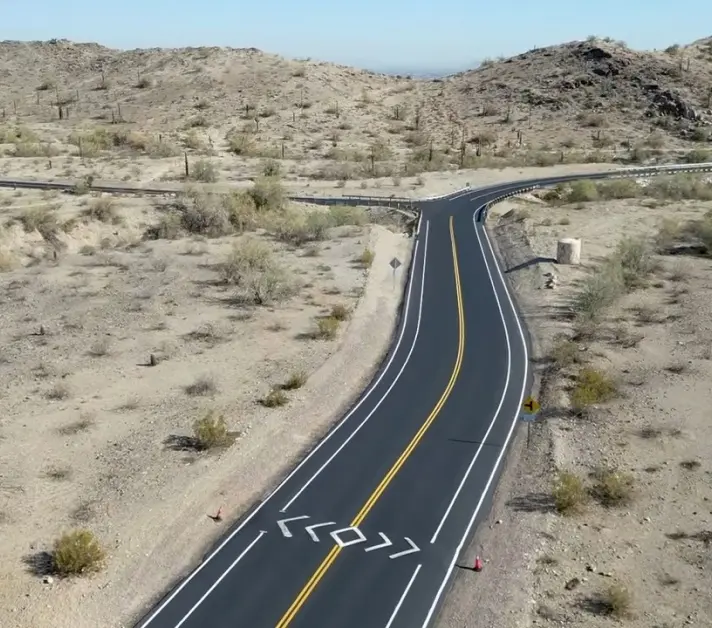
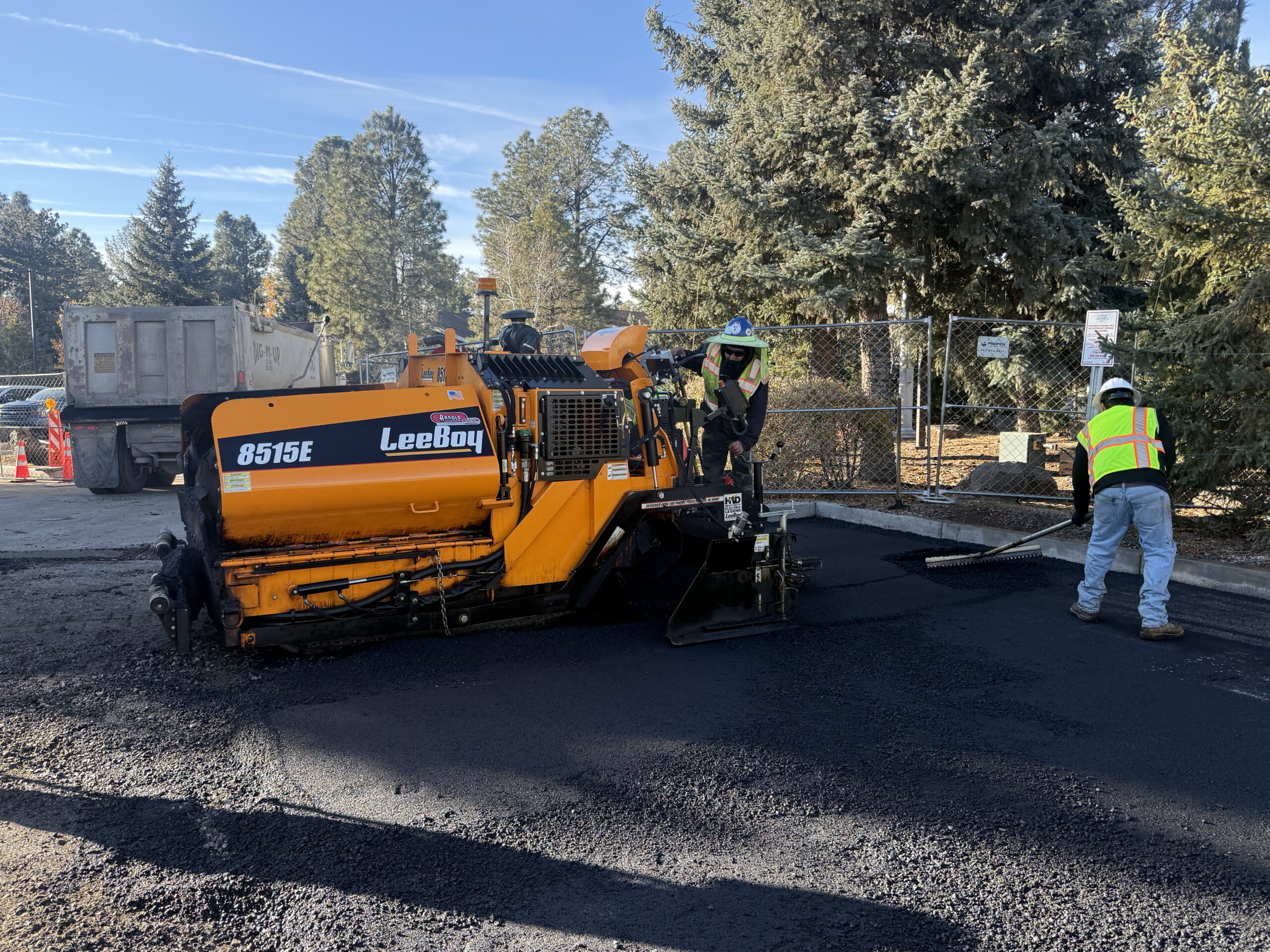
Arizona heat and asphalt damage go hand in hand. Most Phoenix metro property managers underestimate how much heat accelerates parking lot deterioration — surface temperatures in Maricopa County regularly exceed 150 degrees Fahrenheit between May and September. A sealcoating and maintenance program can extend pavement life by years.
Arizona heat damage to commercial asphalt is driven by the Sonoran Desert’s extreme UV exposure, high surface temperatures, and severe daily temperature cycling. UV radiation breaks down the asphalt binder at the molecular level, oxidizing the oils that keep pavement flexible. Asphalt binder in desert climates like Phoenix degrades 30-40% faster than in northern states (National Center for Asphalt Technology, 2024). This degradation exposes aggregate and opens pathways for moisture infiltration during monsoon season. Hot mix asphalt that might last 20-25 years in a temperate climate often loses 50% of its service life without sealcoating. Daily thermal cycling of 50+ degrees Fahrenheit creates stress traditional mixes were not designed to absorb across 150+ days per year. Valor Pavement Solutions, a veteran-led and ROC-licensed Arizona contractor, specializes in commercial pavement maintenance for the Sonoran Desert.
How Extreme Heat Damages Commercial Asphalt
Five primary mechanisms of extreme heat damage to commercial asphalt:
1. UV oxidation that degrades asphalt binder and waterproofing
2. Thermal cracking from daily temperature swings exceeding 50 degrees Fahrenheit
3. Rutting and surface softening when pavement exceeds 130 degrees
4. Binder evaporation leaving the surface brittle and prone to raveling
5. Reflective cracking propagating upward from the base layer
| Damage Type | What Happens | Visual Signs | When It Appears | Preventive Action |
|---|---|---|---|---|
| UV Oxidation | Binder breaks down under sustained UV radiation; surface loses flexibility and waterproofing | Color fades from black to gray; fine surface cracks; loose aggregate in traffic areas | Year 2-4 without sealcoating | Sealcoat every 2-3 years; polymer-modified sealcoat lasts longer in AZ |
| Thermal Expansion Cracking | Daily 50+ degree F swings cause repeated expansion/contraction; stress fractures form | Longitudinal cracks parallel to traffic; block cracking patterns | Year 3-5 in Phoenix; faster than northern climates | Crack sealing before monsoon season; flexible sealcoat application |
| Rutting and Softening | Binder softens above 130 degrees F; heavy vehicles displace material | Ruts at stop signs, loading docks, drive-through lanes; standing water in depressions | First summer for thin-gauge lots; Year 2-3 for standard | Thicker base sections at high-stress areas; sealcoating maintains surface rigidity |
| Binder Evaporation | Volatile compounds gas off above 140 degrees F; pavement becomes brittle | Raveling at edges; sandy/dusty surface texture; crumbling at curb lines | Year 3-6 depending on original mix quality | Sealcoating seals volatile compounds in; rejuvenators for early-stage damage |
| Reflective Cracking | Existing base cracks propagate upward through surface layer; thermal cycling accelerates movement | Old crack patterns reappearing through new overlay; mirror-image cracking | 1-2 summers after overlay without base repair | Address base damage before overlay; crack seal existing cracks before resurfacing |
| Monsoon Moisture Infiltration | Rain enters through heat-created cracks; trapped water softens base under continued heat | Alligator cracking; potholes; base depression near crack clusters | After first monsoon season following crack development | Seal all cracks before July; ensure proper drainage grading |
UV Oxidation and Binder Degradation in the Arizona Sun
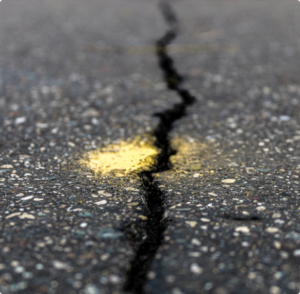
Phoenix averages 300+ sunny days per year with UV elevated 7-8 months. UV oxidation breaks down the binder that holds aggregate together. Your lot fades from black to gray, cracks appear, and loose aggregate shows in traffic lanes. Past a threshold, overlay or full-depth replacement is required.
Thermal Cracking from Day-Night Temperature Swings
The daily swing does the structural damage. Surfaces hitting 155 degrees at 3 PM drop to 95 by 6 AM, producing 120+ expansion-contraction cycles per summer. Thermal cracking shows as longitudinal cracks, block cracking, and widening joints — appearing 3-5 years earlier here than in milder climates.
The Seasonal Maintenance Calendar for Arizona Parking Lots
Most guides miss the monsoon factor and the narrow paving windows that define Sonoran Desert management.
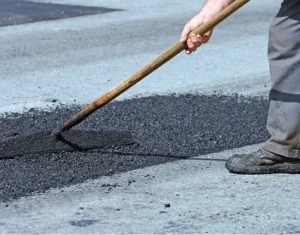
January-February: Crack sealing and patching while asphalt is firm.
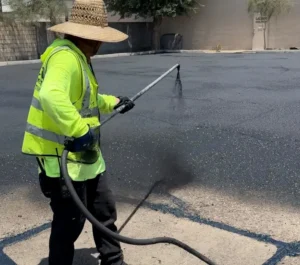
March-April: Prime sealcoating season — cures properly without flash drying.
May-June: Paving and overlay before monsoon.
July-August: Inspection only. Document damage after each storm.
September: Post-monsoon assessment. Prioritize safety, then severity.
October-November: Second sealcoating window and striping.
December: Final patching and budget planning.
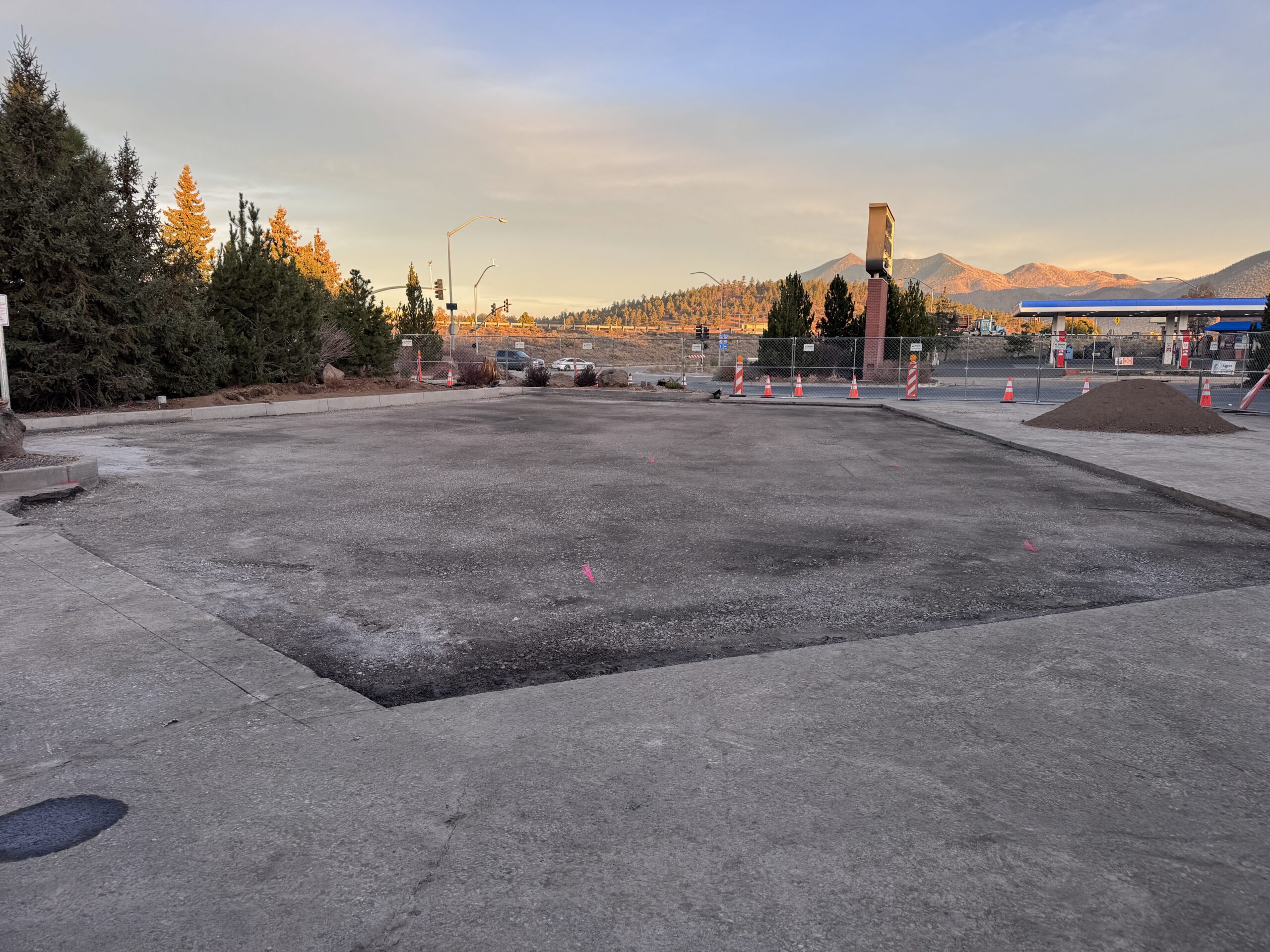
Sealcoating and Preventive Strategies That Extend Pavement Life
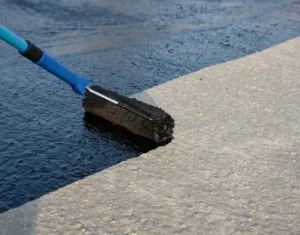
A sealcoat is the single highest-return move for Arizona commercial lots. Without it, a lot typically needs replacement by year 12-15. With consistent sealcoating and crack sealing, it can last 20-25 years.
Frequently Asked Questions About Arizona Heat and Asphalt Damage
Asphalt surface temperatures in the Phoenix metro regularly reach 150-170 degrees Fahrenheit during peak summer afternoons when ambient air temperature is 110-115 degrees. Dark-colored asphalt absorbs and retains solar radiation more efficiently than concrete or lighter-colored surfaces, accelerating binder degradation.
The surface-to-air differential is typically 40-55 degrees Fahrenheit, so a 112 degree air temperature day produces pavement surfaces around 155-165 degrees. Phoenix metro lots stay above 140 degrees for 6-8 hours on a typical July day, causing sustained binder softening, volatilization, and UV oxidation. That duration is what separates Arizona from markets where heat spikes are brief. Shaded areas run 20-30 degrees cooler, which is why damage patterns in Maricopa County often follow sun exposure rather than traffic.
explore our recent
blog & news articles

Arizona heat will keep testing every commercial lot across the Phoenix metro. Property managers who invest in preventive maintenance spend a fraction of what reactive repairs cost. A sealcoating program tailored to the Sonoran Desert is the most direct way to extend your lot's life. Request a free assessment from Valor Pavement Solutions.
Request a Quote